Friday, May 21, 2010

Benefits of Social Media Networking

Below is an abbreviated version of a presentation I gave at a recent Homemaker CEO meeting. Many people miss out on the benefits of social media networking because they hold fast to stereotypes and misconceptions. I am active on Twitter, Facebook, LinkedIn, and The Homeschool Lounge, and I produce three blogs. Social media networking has brought me editing clients, industry advice, genuine friends, and a wealth of information. It's not just about who ate what for dinner or how many loads of laundry need washed! Watch the video. If you'd like to hear more, ask me in the comments section. Thanks!

Jodi Whisenhunt on the benefits of social media networking:


Monday, May 17, 2010

How Do You Respond to Critics?

If you write for publication, you will encounter criticism. Let’s put it this way, if you write your thoughts down, if you release them from your mind and record them in any medium, you will be criticized. You may hear, “That’s nice, but…” from a variety of friends. Your mother will likely say, “But that didn’t happen like that.” Your siblings are apt to blast you for painting them in an ill light. Then will come rejection letters from editors, and after some success, judgment from professional critics. (How bitter does one have to be to call himself a professional critic?)

How will you respond? Will you weep? Will you cower? Quit writing? Will you dispute? Will you defend? Retaliate with a sharp tongue (or sharpened pencil)?

A few years ago, I was blasted by some people close to me. I was called evil, accused of criminal behavior, judged, condemned, and threatened to be sued. There was much more, but I'll spare you the details. Needless to say, there was a major riff between us for a number of years.

During the time I was, well, assaulted, I held my tongue. I knew my innocence. I knew the slander did not apply to who I was. Sure, I was insulted, but I turned the other cheek. I let the critics talk (and they did a lot of that behind my back!). I remained who I was. While I may have been tempted, I did not strike out in anger or retaliation, because the Lord says, "It is mine to avenge; I will repay" (Deuteronomy 32:35).

I prayed to God often Psalm 119:154, "Defend my cause and redeem me; preserve my life according to your promise." I claimed that! I also trusted in Psalm 37:5-6, which says, "Commit your way to the Lord; trust in Him and He will do this: He will make your righteousness shine like the dawn." I committed my way to Him, to carrying on in His work and doing what I felt honored Him. I depended on God to defend me while my offenders continued their abuse in my silence.

This incident taught me to take the negative with a grain of salt, to accept it but to maintain a degree of skepticism. As salt flavors food and makes it more palatable, assess words spoken against you but swallow only truth. And while it may be tempting to lash out at those who attack you, practice self-control. Remember the Lord will defend you. Trust in him and commit to honoring Him in all you do. In doing so, you will maintain a favorable reputation.

Monday, May 3, 2010

The Dreaded "P" Word: Platform

The word platform connotes a certain mental image in my mind. And it’s not a pretty picture. I see a sweaty, burly carpenter covered in sawdust. He’s unshaven, rugged. His clothes are tattered and smelly and plaid and denim, and he’s intent to measure twice, cut once. He saws, hammers, builds. He toils many months in the blazing sun, pouring rain, heat, and cold. In the end, he inspects his work, makes adjustments, and gives final approval, then hands the masterpiece off to its new owner.

Seems like a lot of work for something the builder cannot keep.

As an aspiring author, I’ve been advised to build my platform. No, I don’t think agents and editors want me to build a deck. Although, that would provide a nice writing retreat on clear days, but no. The platform to which they refer consists of everything I’m doing right now to establish an audience who would someday read my book. Those might include the following:
• Regularly post blog entries.
• Guest post on other people’s blogs or participate in blog carnivals.
• Actively participate on social media sites like Facebook, Twitter, and LinkedIn.
• Do public speaking.
• Teach workshops or courses.
• Do radio and/or TV interviews.
• Network with others in the field.
• Attend writers’ conferences.
• Publish articles.
• Do whatever I can to establish readership and a fan base.

And, oh yeah, write that book while I’m at it.

It’s not a pretty picture. The efforts wear on me. I’m covered in Post-it notes, my glasses askew. My hair’s disheveled. I wear plaid. I am intent to measure twice, cut once, so my words are sharp and accurate. I write, I cut, I build, toiling months in my element. In the end, I will inspect my work, make adjustments, give approval, and hand it off to its new owner—the Reader.

See, my work is not something I can keep. The written word must go out. The stronger the platform, the more masterpieces get passed on.

Thursday, April 29, 2010

2009 Amy Writing Awards

Celebrate with me, friends! I was awarded a 2009 Amy Writing Award for "thought provoking, skillful presentation of biblical truth, reinforced with scripture in a mainstream, non-religious publication." My article, "Ready for the Storm," which appeared in the April/May 2009 issue of McKinney Kids Magazine, received 5th Prize and publication in the Amy Foundation’s booklet. The winning article is posted on my website, and can be accessed directly here. It will be available online at The Amy Foundation Monday, May 3, 2010.

I tell you this because yes, I am excited to be honored with this prestigious recognition, but also because I want to encourage you as writers. You see, “Ready for the Storm” was the first article I ever published! It first appeared in a Christian magazine, Living with Loss. I retained the rights and submitted it to McKinney Kids. When it goes live on the Amy Foundation website and is printed in their booklet, it will continue to take God’s message out into the world to places I may never go.

Keep writing, friends. Keep submitting your work. “Whatever you do, work at it with all your heart, as working for the Lord, not for men” (Colossians 3:23). Keep writing for Him!

Click here for more information about The Amy Foundation.

Monday, April 12, 2010

Have You Done Your Research?

We covered the query letter in the last post, but let's back up a step. Let’s say you have an idea for a magazine article. You might even have a draft written. Before you query, you need to research. I don’t mean the research involved in sufficiently covering your topic. Of course, you need to do that, but  I’m talking about researching publications that produce your type of material.

I recommended this book for the query letter clinic, but the current year’s Writer’s Market is invaluable for this type of research! These books sell for about $30-$35 new, but you can find a used copy at Half Price Bookstore for $10-$15 or peruse the library's copy for free. I wouldn’t buy anything more than 2 years old, because editors change often, as do requirements and contact information. If you have an older version, it is still useful for providing websites to look up to get the current information. Plus, a lot of the other information in here is timeless, like the query letter clinic, agent query advice, and numerous helpful articles. They also offer an online subscription service.

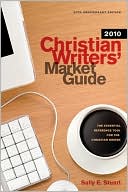
Sally Stuart’s current year Christian Writers’ Market Guide is another essential tool. She lists publishers and agents who either work primarily in the Christian market or are mainly secular but also print for or represent the Christian market. She provides a lot of helpful resources for writers, like Bible research, songwriting resources, instruction courses, etc. 

So, let’s say your idea is an allegory on fishing for sport versus fishing for Jesus. What is your target market? Who might read this article? Men? Fishers? Outdoorsmen? Christian? Non-Christian? Pastors? Pick one & open up your Writer’s Market. 

Look for the proper outlet for your subject matter, whether they accept freelancers, whether they accept new/unpublished authors (if that’s you). Note their response time, whether they accept simultaneous submissions, and what rights they buy. A page near the front provides rights definitions. Typically, you want to look for those who purchase first rights, or first North American rights, or one-time rights. AVOID ones that buy all rights, or you forfeit ownership and the ability to market your material elsewhere in the future.

Narrow your search to a few specific targets, research their requirements, and review a copy. You can view some magazines online. You can request a sample copy of others. Or, you could always go to the library and/or bookstore to find a recent copy. You want to make sure your material is a good fit. Otherwise, you’ll waste the editor’s time and your own.  
Once you know the desired outlet, submit. But, check the publisher’s guidelines first! I can’t stress that enough. Very few accept unsolicited manuscripts. Most want a query letter first. Some want a query with previous published writing samples called clips or tearsheets. Guidelines are posted online or you can request a copy by mail. Also, those who want queries are specific about how they receive them. Some accept them by email (even that is picky – some want it in the body of the email; others as an attachment), some by fax, some by snail mail only. Very few accept telephone submissions. 

Of course, there are exceptions to every rule. A friend in my writers' group has had great success with calling editors and publishers directly. BUT she researches her market and her target publisher BEFORE calling.  She is prepared with information in front of her before she picks up the phone. Based on my experience and what editors and publishers state in their guidelines, their articles, their books, and their blogs on the subject, most prefer the query letter.

Alright, get to work!

This sums it up ;)

This sums it up ;)